Espresso machine for home: metal body, 20 bar or a built-in grinder
Espresso machines under €250
A portafilter machine asks something of you. You dose ground coffee into a metal basket, press it flat, lock the handle into the group head and push a button. Nothing decides the strength on your behalf. For most buyers that is the appeal: the shot is yours to get right, and once you have it right it comes out the same every morning.
The four machines in this espresso machine comparison all work that way. Each is a stainless steel espresso machine, each froths milk through a steam wand, and all four sit in the band where a first machine usually gets bought. What they can do in the cup is not what separates them. The real differences are the housing, the bar figure printed on the box, whether a grinder lives inside the housing, and how much worktop the machines take once plugged in.
Four machines, four different answers. The De'Longhi Classic EM450.M is full metal with a pressure gauge on the front and four lit buttons. The Neretva 20 Bar runs at higher pressure and shows the brewing temperature on a display. The De'Longhi Dedica Style Perfetto is only fifteen centimetres wide. The Chefman Crema Supreme carries its own conical grinder and a three-litre tank. They stay in the same price class: in most stores each one stays under $250, and the group sits near $170.
Models in this comparison
Typical price across these models: about €161. Rough figures from store prices converted at fixed rates: what you pay also depends on the store and the region you order from. With our browser extension you can compare every Amazon store at once, right on the product page.
De'Longhi Classic EM450.M, the full-metal espresso machine
The Classic sits in the middle of this group of espresso machines, both in size and in price. Fifteen bar of pump pressure and a thermoblock heater are the standard recipe at this level, and the heater is the half that matters: this espresso machine is ready in about a minute and then holds the brewing temperature, which shapes the taste of a shot far more than the bar figure does. Four illuminated buttons cover single espresso, double espresso, steam and hot water — no menu, no screen. The gauge on the front panel reads the pressure while the shot runs, so you can see a blocked basket instead of guessing.
De'Longhi built the body out of metal with chrome details and gave the machine a 1.7-litre tank, the second largest of these four. The cappuccino system on the steam wand switches between fine milk foam and plain hot milk. The drip tray slides between 100 and 130 millimetres, so one machine takes both a small ceramic cup and a large glass. In the box: a plastic tamper, a spoon and double-walled filter baskets, the pressurised kind that build a crema even from supermarket coffee.
This machine suits someone who wants metal in their hand, a gauge to watch and no software in the way. Skip this espresso machine if your kitchen has fifteen spare centimetres and no more, because the slim Dedica further down is built for that shelf. Skip it too if you plan to grind your own beans and would rather have the mill inside the machine.
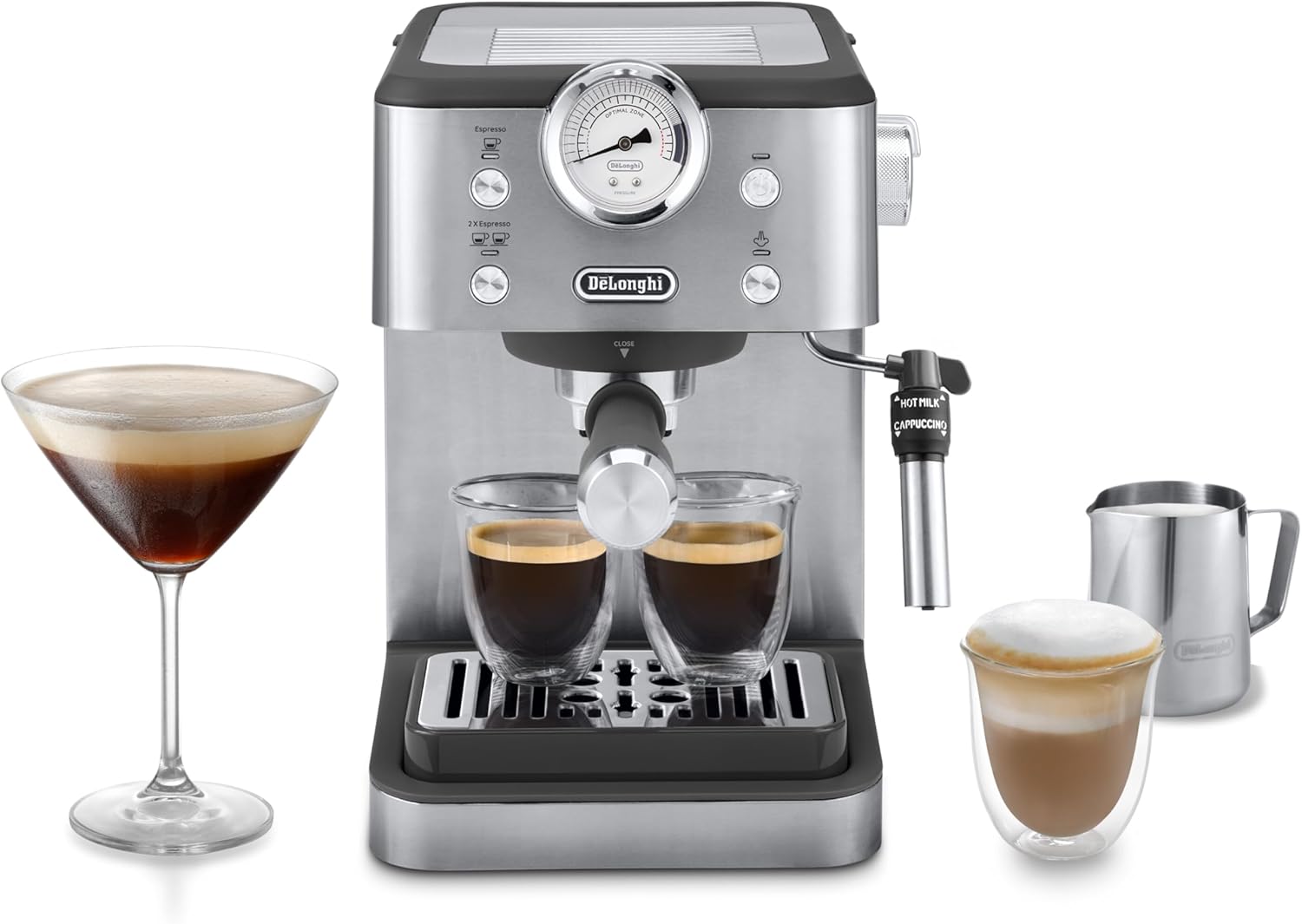
De'Longhi Classic EM450.M Portafilter Machine, Espresso Machine with Professional Milk Frother, Full Metal Housing, 15 Bar, 1.7 L Water Tank, Stainless Steel/Metal
ASIN: B0DWFYRPFN
- ✓Full metal housing with chrome details and a working pressure gauge on the front
- ✓Thermoblock heater: brewing temperature in about a minute, then held steady
- ✓Four lit buttons — single espresso, double espresso, steam and hot water
- ✓Drip tray adjusts between 100 and 130 mm, so espresso cups and tall mugs both fit
- Pressure
- 15 bar
- Power
- 1,325 W
- Water tank
- 1.7 litres
- Heating
- Thermoblock
- Operation
- Manual, ground coffee
- Weight
- 4.44 kg
The praise from owners is consistent and mostly about the cup. Owners describe an espresso with a thick crema that survives being drunk, and coffee that arrives genuinely hot. Several came from cheap no-name machines that leaked or rattled and say the difference in build is obvious: this machine feels solid, looks good on the worktop and is ready sixty seconds after switching on. Milk frothing gets its own compliments — fast, easy, good enough that owners make cappuccino at home instead of buying it. One owner up from a supermarket machine notes that the pressure gauge is functional rather than decoration, and a buyer in Belgium with thirty years of espresso machines behind him calls this the best he has owned.
Three complaints repeat, and one is serious. Several owners report a strong plastic or smoky smell from the water tank and the heated plastic parts. For one it faded over four weeks and never reached the coffee; for another it was still there after two weeks of scrubbing; a third dropped this espresso machine to one star because the taste got into the water, so run several tanks through the machine before judging it. The smaller gripes: the cup rest barely warms cups, the frother sleeve is awkward to refit because its notch sits out of sight, the filter inserts feel shallow, and the printed instructions are pictograms with the full manual left as a download. One owner explains the pause people complain about after steaming — run the steam cycle into a glass for a few seconds and the machine is ready again.
Pros
- Espresso with a thick, lasting crema and coffee that comes out hot
- Solid metal body that owners rate well above no-name machines
- Milk froths quickly and easily, cappuccino included
- Pressure gauge that actually tells you something
- Drip tray height adjusts for cups and tall glasses
Cons
- Plastic smell from the water tank, sometimes lasting weeks
- Cup rest on top hardly warms anything
- Steam wand sleeve is fiddly to put back after cleaning
- Filter baskets are shallow and hold less coffee than owners expect
Bar, thermoblock and tank on an espresso machine spec sheet
Three numbers separate these machines in daily use, and only one of them is the number the packaging shouts about.
- Bar pressure is nearly settled. Nine bar is what espresso actually wants, while three of these machines are rated at fifteen bar and one at twenty, and both figures are the pump's maximum, not the pressure at the coffee. Machines with a higher number on the box are not extracting harder; they have headroom.
- The heater is the real difference. Both De'Longhi machines use a thermoblock, which heats water as it passes instead of storing a hot reservoir, so they are usable a minute after switching on. The trade-off shows when you move between steam and coffee: the water is then too hot for a shot, and you release some through the wand. The Neretva machine prints a code on its display while it cools.
- Tank size sets the refill rhythm. One litre against three is the widest gap here, because a one-litre tank on espresso machines used twice a day means filling every few days, while three litres runs a weekend of guests. Bigger tanks come on bigger machines.
Two more things before the cards. None of these espresso machines is dishwasher safe, so the portafilter, baskets and tray are hand-washed for the life of these machines. And the basket in the box is usually pressurised: double-walled, with one hole underneath, which flatters stale coffee — exactly what a beginner needs — and caps what a good grinder can add later.
Neretva 20 Bar, an espresso machine for beginners
This is the best-reviewed espresso machine in the group, on more than 1,600 ratings, and the cheaper pick of these machines in most stores. Twenty bar and 1,350 watts sit behind a stainless steel front with a temperature display that reads in real time; the machine holds around 92 °C. It also has one feature none of the other machines lists: low-pressure pre-infusion, which wets the coffee before full pressure arrives. The portafilter is 51 millimetres, the tank holds 1.3 litres, and the box adds a dosing funnel and two baskets, though the manual is not guaranteed to be in your language.
Owners talk about a creamy espresso with a strong, balanced taste, a machine that heats fast and is easy for a first-timer. The printed guide gets singled out for explaining how to avoid bitter or sour shots, and a German owner five months in reports nothing broken and support that answers within two days. A French owner rates the result above bean-to-cup machines at several times the price.
The limits of this machine are real too. There is no way to set coffee strength or shot volume, and one owner says the volume drifts from cup to cup. A tall glass will not stand under the spout unless you remove the drip tray and hold the cup. Because the group is 51 millimetres, replacement portafilters are hard to find. One owner coming from a KitchenAid found the crema thin, and another reported a weak steam wand. This espresso machine is for someone starting out, not for someone who already knows how they like a shot dialled in.
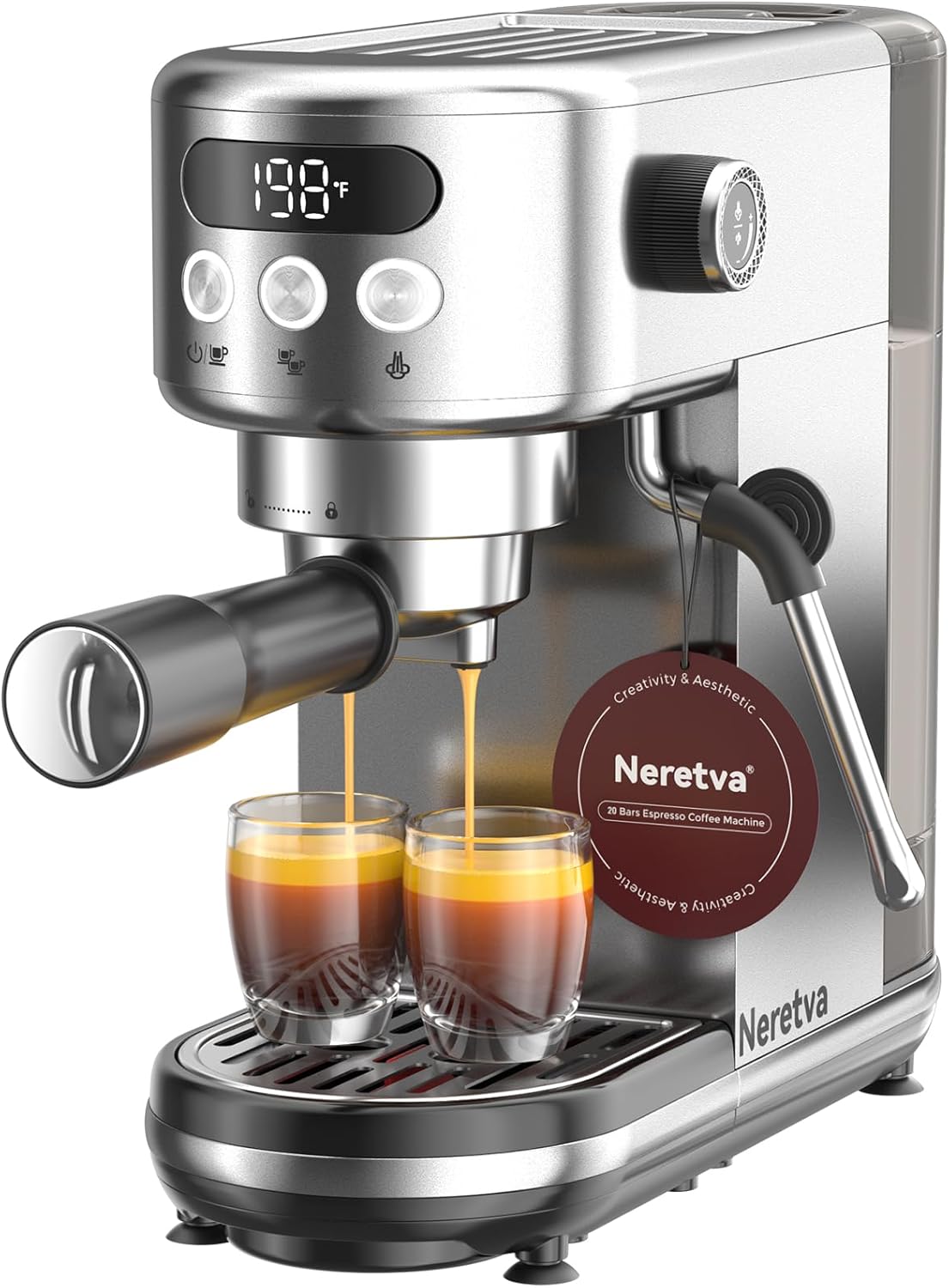
Neretva 20 Bar Portafilter Machine Small Espresso Machine Stainless Steel
ASIN: B0G5PHVP8L
- ✓Temperature display showing the real brewing value, around 92 °C
- ✓Low-pressure pre-infusion wets the coffee before full pressure
- ✓20 bar pump and 1,350 W behind a stainless steel front
- ✓51 mm portafilter, dosing funnel and two baskets in the box
- Pressure
- 20 bar
- Power
- 1,350 W
- Water tank
- 1.3 litres
- Portafilter
- 51 mm
- Operation
- Manual, ground coffee
- Size (D×W×H)
- 30.3 × 33 × 14.9 cm
Open this product on Amazon
Amazon prices change all the time, so check the current one on the store page. To compare every Amazon store at once, use our browser extension.
De'Longhi Dedica Style Perfetto, a compact espresso machine
The Dedica answers a narrow kitchen: this compact espresso machine is fifteen centimetres wide and hides beside a kettle, yet it keeps the fifteen bar pump and thermoblock of its bigger relative. It is also the only machine here that takes E.S.E. pads as well as ground coffee, useful when a second person in the house wants coffee without ceremony. The controls are illuminated, the drip tray and tank come out for cleaning, the cup shelf is height-adjustable and a flow stop lets you cut the shot by hand. The tank is one litre, the smallest of these machines.
In the cup, owners are happy: espresso with a proper crema, close to a bar in Italy, and a steam wand that works better than the size suggests. Nothing rattles, grounds knock out cleanly, and the basket has a single hole in the bottom that keeps results consistent — as long as no grain blocks it, which means watching your grind. A Portuguese owner explains the real attraction: this espresso machine saves counter space and takes a bottomless basket happily, so paired with a decent grinder it beats what most cafés serve.
This is also the weakest average score of the four, at 3.7 on 61 ratings, and the reasons are specific. Long-standing Dedica owners say the materials have been cheapened: the overflow tray and water tank are thin plastic where earlier machines were not. The spring in the portafilter is too weak, so the basket sticks and has to be worked out, and the manual for their language was missing from the box despite the text referring to it. One Italian buyer returned the unit after a week because it stopped switching on. Buy this machine for the footprint and the pads, not for the build of a Dedica from ten years ago.
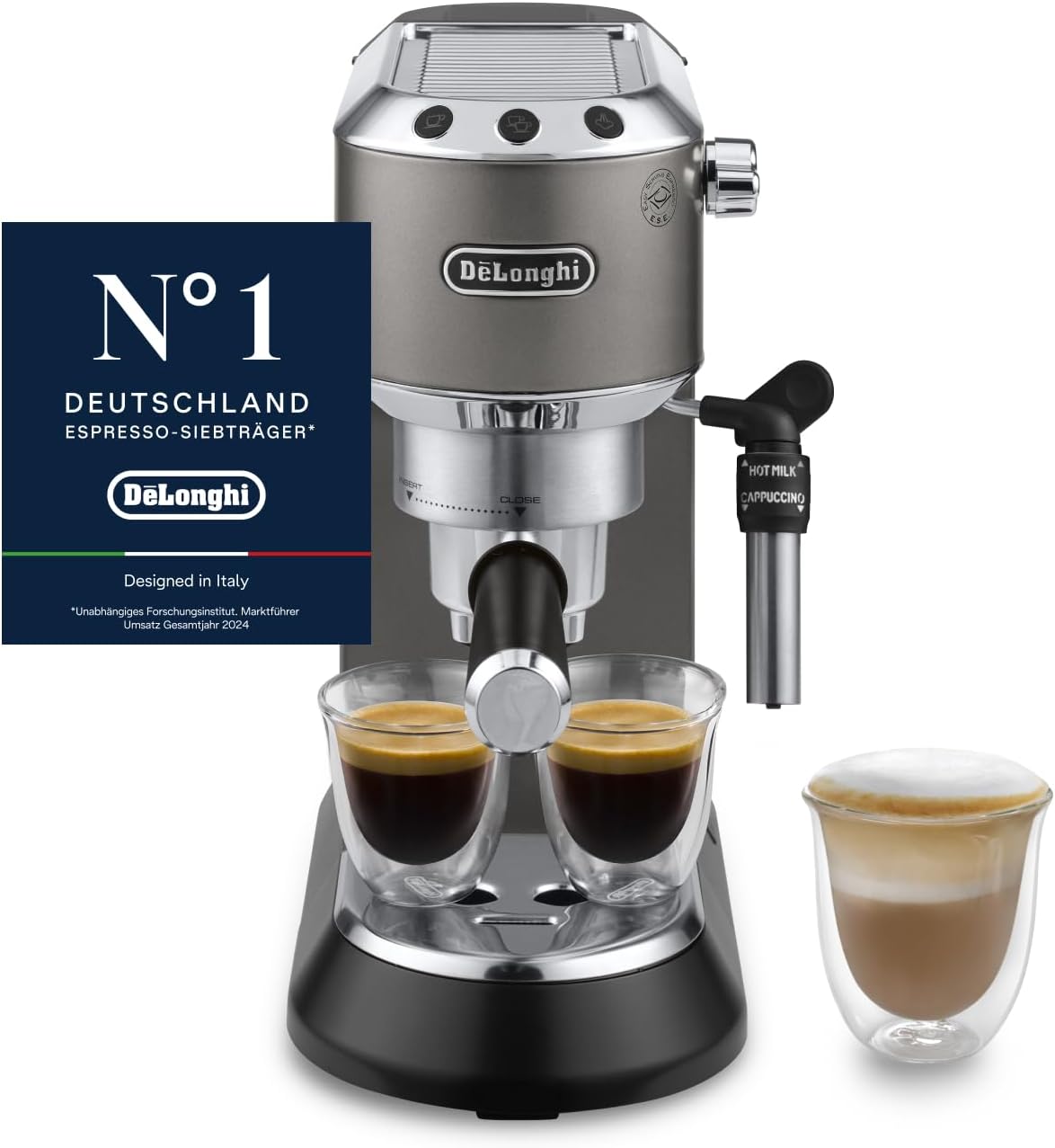
De'Longhi Dedica Style - Perfetto Compact Portafilter Machine Espresso Machine with Buttons, Manual Milk Frother for Espresso and Cappuccino, ESE Pad Suitable, 15 cm Wide, Titanium (EC685.TB)
ASIN: B0FRH1S4P3
- ✓Only 15 cm wide — the narrowest machine in this comparison
- ✓Takes ground coffee or E.S.E. pads
- ✓Manual wand for fine micro foam or coarser cappuccino foam
- ✓Flow stop, height-adjustable cup shelf, removable tray and tank
- Pressure
- 15 bar
- Power
- 1,350 W
- Water tank
- 1 litre
- Heating
- Thermoblock
- Coffee input
- Ground or E.S.E. pads
- Size (D×W×H)
- 33 × 14.9 × 30.5 cm
Open this product on Amazon
Amazon prices change all the time, so check the current one on the store page. To compare every Amazon store at once, use our browser extension.
Chefman Crema Supreme, the espresso machine with a grinder
The Chefman changes the question this comparison asks. A conical grinder with thirty settings sits in the housing and drops fresh coffee straight into the portafilter, so beans go in one end and espresso comes out the other with no second appliance on the worktop. Water temperature, shot volume and dose are adjustable, there is a pressure gauge on the display, and the tank holds three litres. Single and double baskets, a steel tamper, a spoon and a cleaning tool come with the machine. This is a semi-automatic machine rather than a purely manual one, and by far the biggest of these machines: forty-one centimetres wide and the same tall.
Owners are surprised by what the money buys. They describe heavy, robust components, a portafilter that locks in with a solid click, a steam wand that works properly and a mill that grinds genuinely fine. One buyer who already owns an award-winning machine bought this as an experiment, expected to send it back and kept it for the home office instead. Another moved from a machine without a mill and says the grinder alone changed the routine.
Two warnings come from the reviews rather than the specification. The descaling programme does not appear to work: two owners report that running it resets every setting, which on a machine with this many adjustments is genuinely annoying. And good coffee takes patience here — grind, dose and water all interact, and owners say it took days of testing before the shots were right. The pressure display is also called less than accurate. Buy this espresso machine if you want the grinder, have the worktop for it, and think fiddling with settings is the fun part.
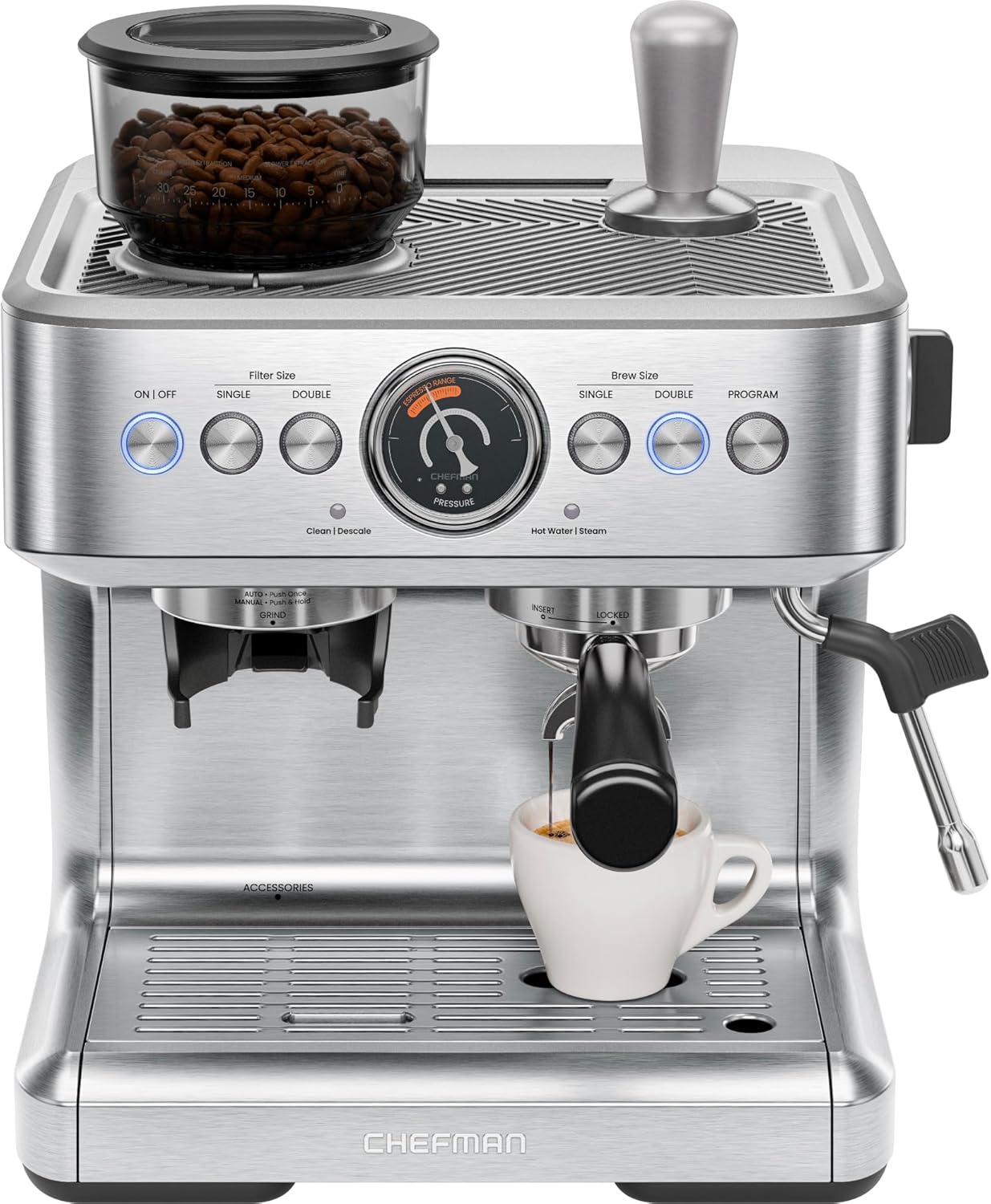
Chefman Crema Supreme 15 Bar Espresso Machine, Coffee Grinder, 30 Grinding Levels
ASIN: B0FZC8662N
- ✓Conical grinder with 30 settings, grinding straight into the portafilter
- ✓Adjustable water temperature, dose and shot volume
- ✓3-litre removable tank, the largest here
- ✓Steel tamper, single and double baskets and a cleaning tool included
- Pressure
- 15 bar
- Grinder
- Conical, 30 levels
- Water tank
- 3 litres
- Coffee input
- Ground or whole beans
- Operation
- Semi-automatic
- Size (D×W×H)
- 34 × 41 × 41.5 cm
Open this product on Amazon
Amazon prices change all the time, so check the current one on the store page. To compare every Amazon store at once, use our browser extension.
Espresso machine comparison by the specifications
The figures behind the four machines sit in one table, so the trade-offs are visible together.
| Parameter | De'Longhi Classic EM450.M | Neretva 20 Bar | Dedica Style Perfetto | Chefman Crema Supreme |
|---|---|---|---|---|
| Pressure | 15 bar | 20 bar | 15 bar | 15 bar |
| Power | 1,325 W | 1,350 W | 1,350 W | — |
| Water tank | 1.7 l | 1.3 l | 1 l | 3 l |
| Built-in grinder | — | — | — | Conical, 30 levels |
| Coffee input | Ground | Ground | Ground or E.S.E. pads | Ground or whole beans |
| Operation | Manual | Manual | Manual | Semi-automatic |
| Pressure gauge | Yes | — | — | Yes, on the display |
| Temperature readout | — | Yes, around 92 °C | — | Adjustable |
| Size (D × W × H) | 28.3 × 22.6 × 31 cm | 30.3 × 33 × 14.9 cm | 33 × 14.9 × 30.5 cm | 34 × 41 × 41.5 cm |
| Rating | 4.2 (495) | 4.3 (1,631) | 3.7 (61) | 4.2 (75) |
Read each rating next to the number of people behind that machine. The Neretva's 4.3 rests on more than 1,600 opinions, the firmest figure in the table; the Dedica's 3.7 comes from 61, a small crowd but a consistent story about materials. Notice how little the pressure row tells you and how much the size row does: the widest of these machines is nearly three times the width of the narrowest.
How to choose a home espresso machine
No home espresso machine here is right for everyone, so work through the questions below in this order, because the first two rule out more than the rest.
- Measure the space first. Width, depth and the gap under your wall cupboards all matter, because fifteen centimetres against forty-one is not something you design around later, and espresso machines that do not fit get returned.
- Decide about the grinder now, not in a year. Fresh grinding changes the cup more than any other single upgrade, so either buy the espresso machine with a grinder inside, or accept that a separate grinder needs its own patch of worktop.
- Count the refills you are willing to do. One litre is fine for one person and irritating for a household; three litres covers a weekend with visitors on the largest machine here.
- Look for the readout you will use. A pressure gauge tells you whether the extraction is running well, a temperature display tells you the machine is ready, and both beat a bar figure.
- Check what you will replace. All four machines come with a tamper, two of them the plastic sort, and owners here replaced tampers and pressurised baskets early.
- Plan for hand washing and descaling. None of these machines is dishwasher safe, and a descaling mode printed on the box is not proof that it works.
The mistake people regret most is buying for the bar figure. Twenty bar is not twice as good as ten, and the machines here with the lower number are the ones owners describe as tasting like a café. The second regret is space: a mill inside the housing is wonderful until the machine blocks a socket and a cupboard door.
Frequently asked questions
- Is a 20 bar espresso machine better than a 15 bar one?
- No. Both figures describe the pump's maximum, and espresso is brewed at around nine bar. The ratings and reviews of these machines do not favour the higher number.
- Do I need a separate grinder?
- Only the Chefman Crema Supreme has a mill inside; the other three machines take ground coffee, and the Dedica also takes E.S.E. pads. Owners who added a grinder later call it the change that improved their coffee most, so plan for either an espresso machine with a grinder or the worktop space for a second appliance.
- How long does an espresso machine take to be ready?
- Both De'Longhi machines use a thermoblock and are usable about a minute after switching on; owners of the Classic confirm sixty seconds. After frothing milk you release some water through the wand before the next shot, because the boiler is then too hot for coffee.
- Will the plug fit if I order from another Amazon store?
- Not always. These machines are sold across several Amazon countries with the plug of that market fitted, so check the store you order from and budget for an adapter when the standards differ.
Verdict
Every model on the same criteria
Score against price
- De'Longhi Classic4.3 at about €143
- Neretva 20 Bar4.3 at about €125
- Dedica Style Perfetto3.6 at about €148
- Chefman Crema Supreme4.2 at about €226
The overall score divided by the typical price, with the best in the group as the full bar. A rough guide, not a verdict — a cheap model that misses the feature you need is no bargain.
Read the bars as trade-offs, not as a ranking. Every machine here wins one row and loses another: the widest body carries the only grinder and the largest tank, the narrowest one gives up build quality for its fifteen centimetres, and the machine with the highest bar figure is the one that lets you set the least. Three of the four sit between 4.2 and 4.3 on Amazon, on very different crowds — more than 1,600 opinions behind one of them and fewer than a hundred behind two others, so treat the small samples as a hint rather than a verdict.
All four machines make espresso worth drinking, so choose on space and on the grinder question, in that order, and the bar figure on the box stops mattering. Get those two right and the machine stays plugged in for years; get them wrong and it becomes the appliance you move aside to make room for a toaster.